 FR
Modular Piped Water Systems
Flexible, modular designs to lower costs and maintenance
“To introduce a water provision service in a sustainable manner it is key to understand consumer behaviour first and find the optimal service level. The hardware comes secondary.”
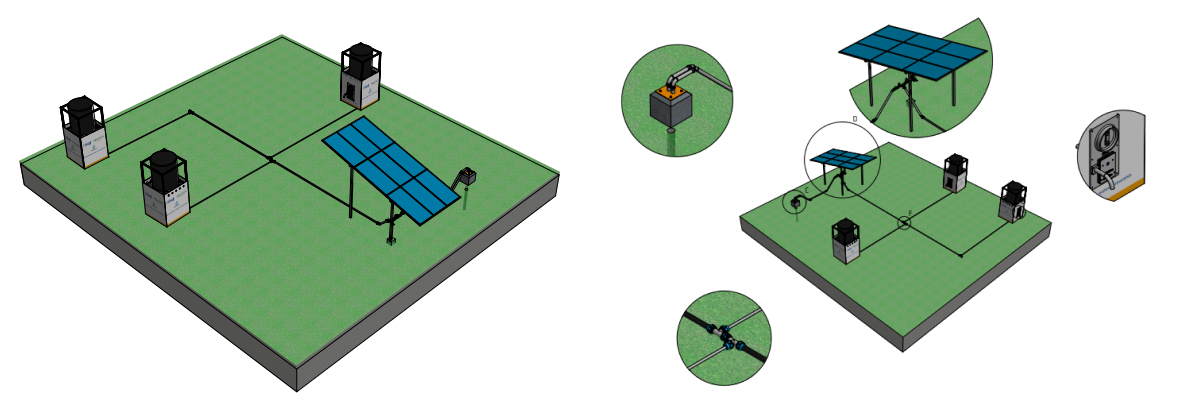
Modular solar water systems
The technical and financial sustainability of water provision is rooted in the design of the water systems’ hardware and software. Applying inappropriate design standards – including wrongly estimated actual water needs and future population growth-, and inadequate site selection can be causes of failure in the operational phase.
The application of hand pumps is the standard in the rural development context. This fits certain locations but has major drawbacks in a number of settings. When several small settlements are located scatteredly and women and children are walking long distances to fetch water, you probably aim to enable a safe water resource in each settlement. In this case, constructing hand pumps is a relatively expensive endeavour, especially if deep wells need to be drilled. The limited number of users /paying consumers per well also reduces the chance of a sustainable business case for operation and maintenance in the long run.
PRACTICA offers a new approach based on the principles of modularity and low maintenance. This system entails the design of a mini-grid based on the local needs and wants. The core consists of small stand-alone water kiosks. Multiple kiosks can be placed in one village (or set of neighbouring villages) – depending on local circumstances and preferences. These kiosks are fed from a single well without the need for a central water tower. This type of mini-grid setup can also be attached to existing piped networks of water utilities to serve peri-urban settlements.
Paying careful attention to site selection and considering the actual water use, the modular piped water system can be placed at a minimal cost (with a minimum of 250 water users). When more water is required, or more people need to be served, additional pipelines, public standpoints, and also household connections can be established— using the same water source.
Hardware – such as prepayment devices – might be added to ensure cost recovery and support the management structure. This enables the collection of water fees over the years, even with the unpredictability of settlements growing over time. The likeliness local communities are willing to pay for water increases too. Modular piped water systems provide a higher service level compared to handpumps since safe water can be tapped near people’s doorstep. In this way, these mini-grids allow for private sector operation.
So far, all introduced systems by Practica have been installed with solar panels, which contribute to climate (CO2) neutral operation and lower operational costs. With the expansion of the modular grid, easily extra solar panels can be installed.
PRACTICA provides consultancy services and trains government- and water utility staff to design water systems with this financially sound and modular approach in mind. Where necessary, we also strengthen and equip the private sector with the technical skills to install, maintain and repair this type of water service.
For more information, please contact us.
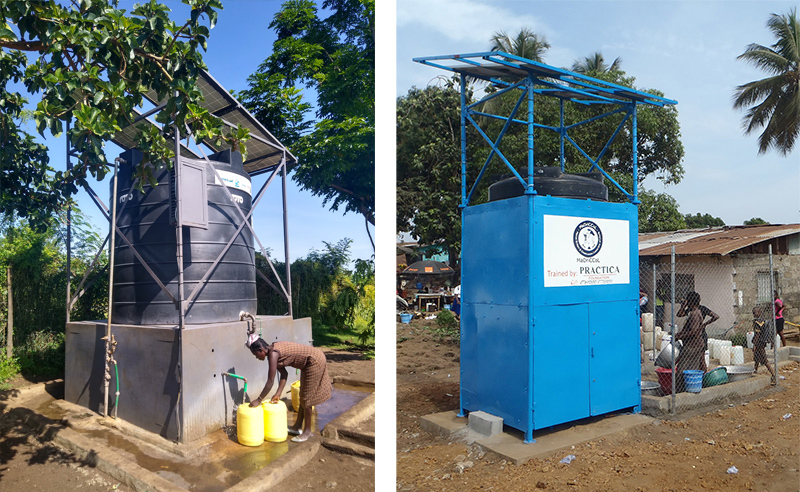
Left: modular system in Uganda. Right: Liberia.